
A few nights ago, sometime between "I should sleep" and "I wonder what would happen if…", I decided to test how fast we could actually build a complete application on WorqHat. Not a demo. Not a guided example. A real thing. Something with UI, state, logic, authentication, scoring, animation, the whole mess that normally turns into two sprints and nine Slack threads.
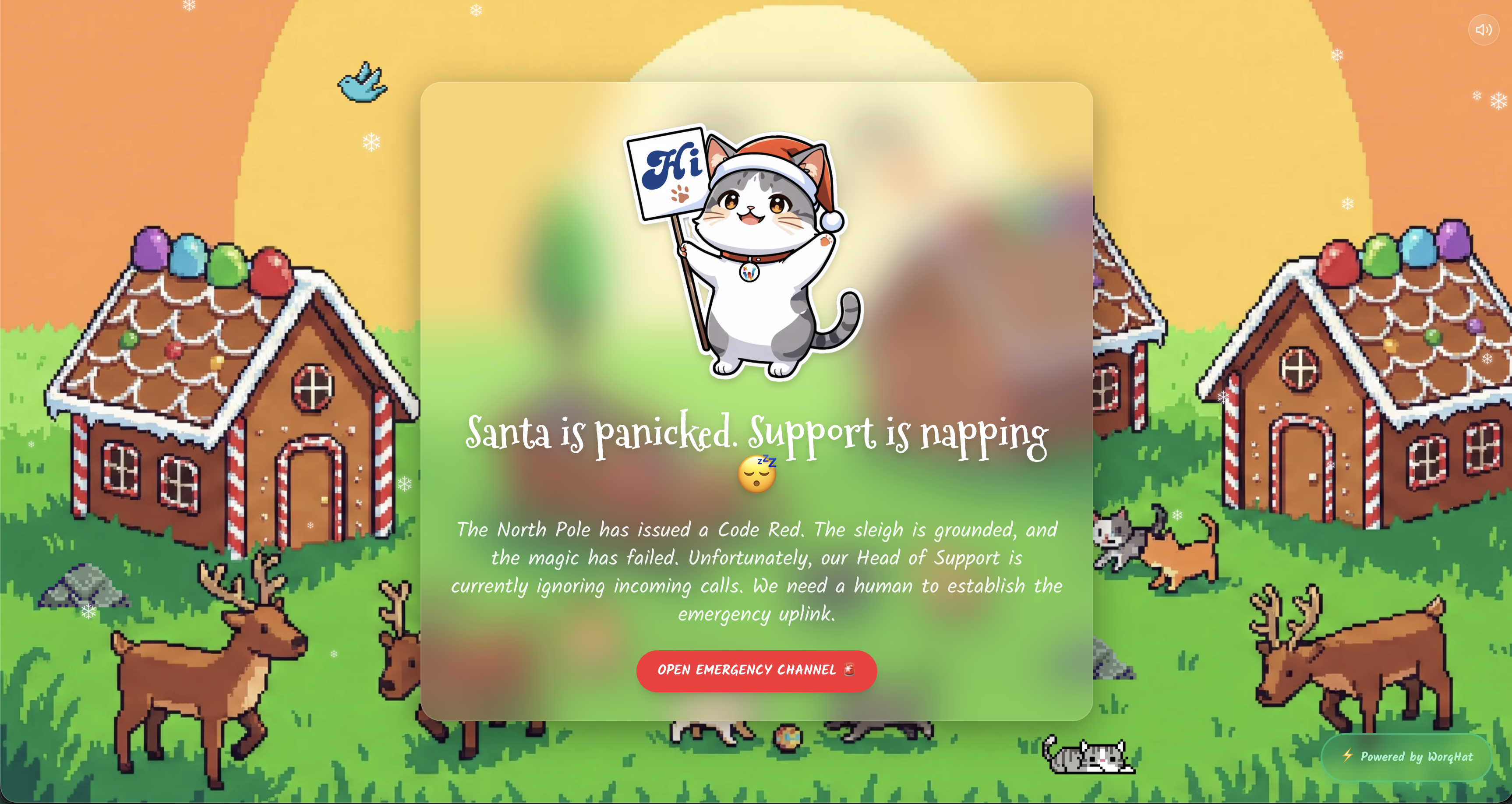
The idea I landed on was ridiculous enough to be fun: a Christmas puzzle game that boots like a hacker terminal, talks back to you, and rewards you with gift cards, merch, and mild emotional damage. I called it sleigh-OS, and I gave it a guardian named OLIVE, based on my actual cat, who is somehow more judgemental in software form than she is in real life.
The challenge was simple: build the entire thing end to end in under eight hours using nothing except WorqHat's App Builder, Workflows, and Database. Think of it as a speed-run, except instead of a video game, the timer was running against production deployment.
Building the Terminal Interface
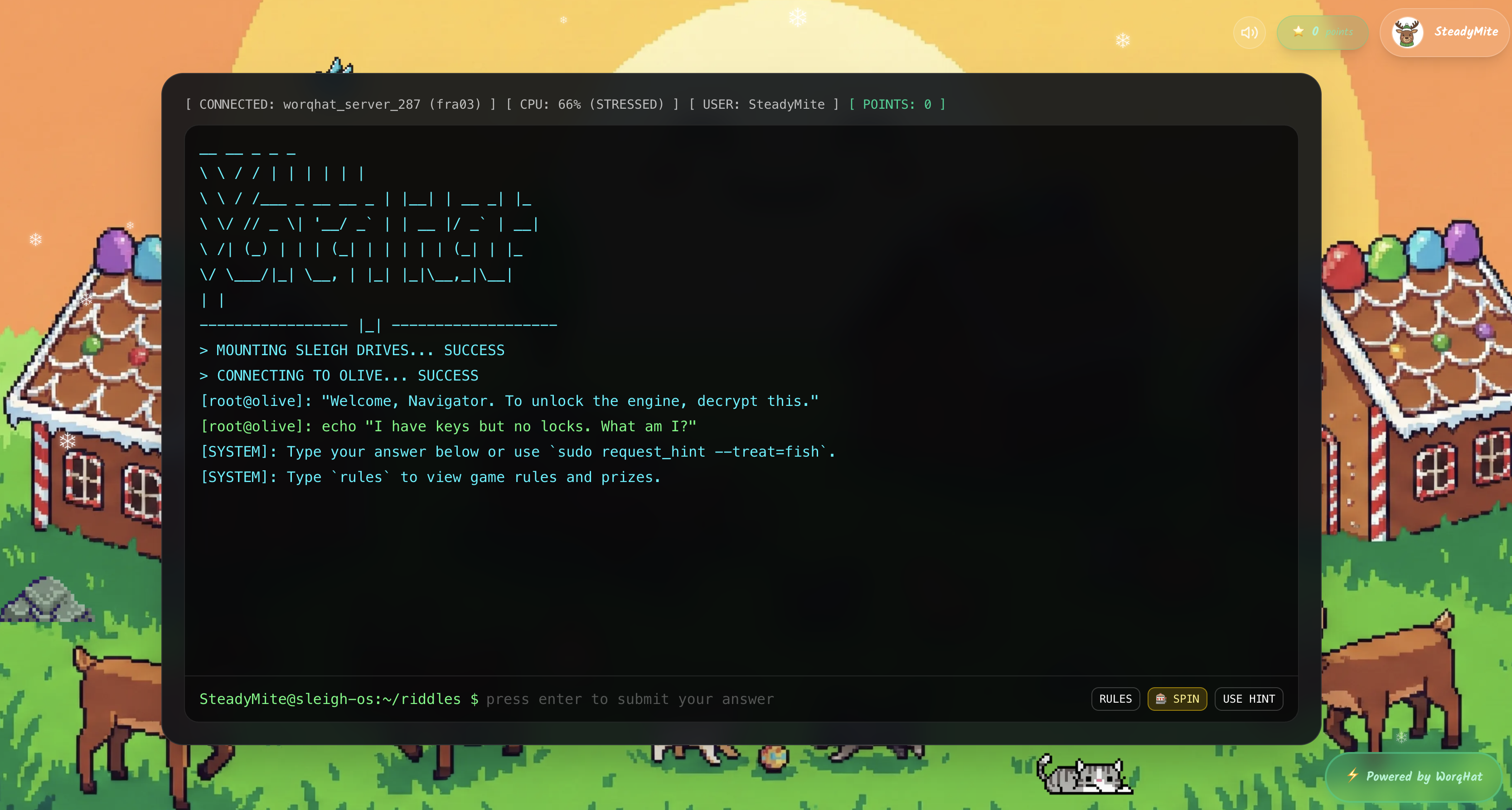
So I started with the terminal interface. The UI came together shockingly fast. The App Builder Canvas handled everything from the typing animations to the scrollback log, the snowfall, the sound toggle and the fake boot sequence. Normally, building something like this would require a whole front-end setup, theme management, custom components and a lot of CSS that ruins your night. Instead, it was mostly dragging, rearranging and wiring UI blocks to workflows. No repo, no yarn install, no existential dread.
Giving It a Brain
Once the terminal was alive, the real fun started: giving it a brain. WorqHat Workflows essentially became the entire game engine. Every user input was routed into a workflow that decided whether it was a command, a riddle answer, a hint request or just someone typing to beg OLIVE for mercy. The workflows handled answer validation, riddle progression, score updates, hint cooldowns, daily spin eligibility and the slightly unhinged commentary OLIVE throws at people when they get an answer wrong. I did not write a backend. I did not deploy a server. I did not configure routing. The workflows took over everything.
The workflow architecture was surprisingly elegant. Each interaction flowed through a single entry point that branched based on context—command parsing, riddle validation, hint requests, or just general chat with OLIVE. The AI responses were contextual, sometimes helpful, sometimes devastatingly sarcastic.
Storing Game State
WorqDB made storing game state effortless. User profiles, points, timestamps, riddle positions, spin cooldowns — all of it lived in instantly created tables. No migrations. No provisioning. No wondering if I should set up a Redis cache or pretend I will later. The leaderboard was just a query feeding a UI table that refreshes every few seconds, and somehow that felt luxurious.
The Core Loop
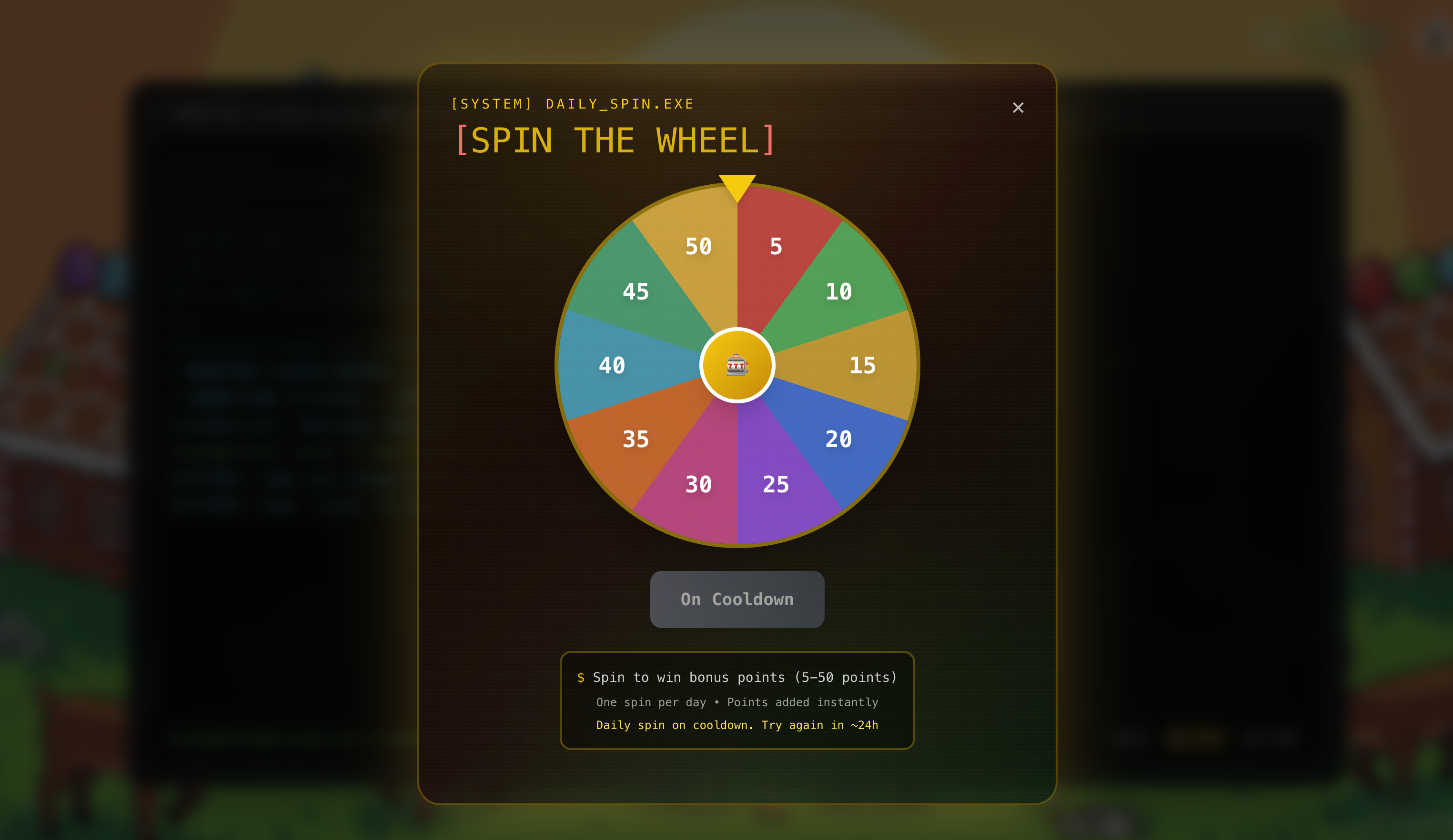
By hour four, the core loop of the game was alive. By hour six, the spin wheel was functional and, as expected, immediately cursed. People love and hate random rewards in equal measure, which means the mechanic works. The wheel animation was simple enough to implement in the Canvas, and the entire logic behind eligibility and reward calculation stayed in the workflows. No bugs so far, except OLIVE trying to congratulate people when they were absolutely wrong. I blame her real-life counterpart.
From Experiment to Production
Somewhere around hour seven, sleigh-OS went from "late-night experiment" to "oh this is actually production ready." It had authentication, real-time scoring, a multi-step game state, a full UI, interactive logic, error handling, a personality layer, and an entire set of prizes tied to leaderboard performance. Most importantly, it was stable, responsive and fast — without any backend engineering effort.
And that was the point of this entire exercise.
This wasn't about building a Christmas game. This was a stress test disguised as festive chaos. I wanted to see how fast we could go from idea to production without engineering overhead, and whether enterprises could realistically build internal tools, dashboards, AI apps and micro-systems at the same speed. sleigh-OS was our way of proving the ceiling of the platform. If we can ship a fully functional, multi-user, stateful application with animations, AI interactions and game mechanics in eight hours, then an enterprise team can absolutely ship an operations dashboard, approval flow, internal CRM, or agent-powered UI in a fraction of the time they expect.
The Deployment That Barely Counted as Deployment
The funniest part of this entire experiment is that deployment wasn’t really a “step” at all. There was no devops moment. No hosting checklist. No YAML. No scaling plan. I clicked publish, and sleigh-OS was… out. Live. Global. Instantly available for anyone to play with zero extra configuration from my side.
It felt almost wrong. Normally, shipping something with a terminal interface, real-time scoring, login, a spin wheel, and an AI cat would require a whole afternoon of ops rituals. This time the app simply appeared on the internet and immediately invited chaos.
And people brought the chaos. Some tried to outsmart OLIVE. They failed. Someone begged for a hint. Someone else typed “please” into the console because they thought that would help. It did not.
The AI version of OLIVE responded with something colder than December itself. The real OLIVE would absolutely approve.
Try It Yourself
If you want to see what eight hours of no code, too much coffee and questionable life choices can produce, sleigh-OS is here for you:
https://xmas-with-olive.worqhat.app/
If OLIVE insults you, good news, the system is working.
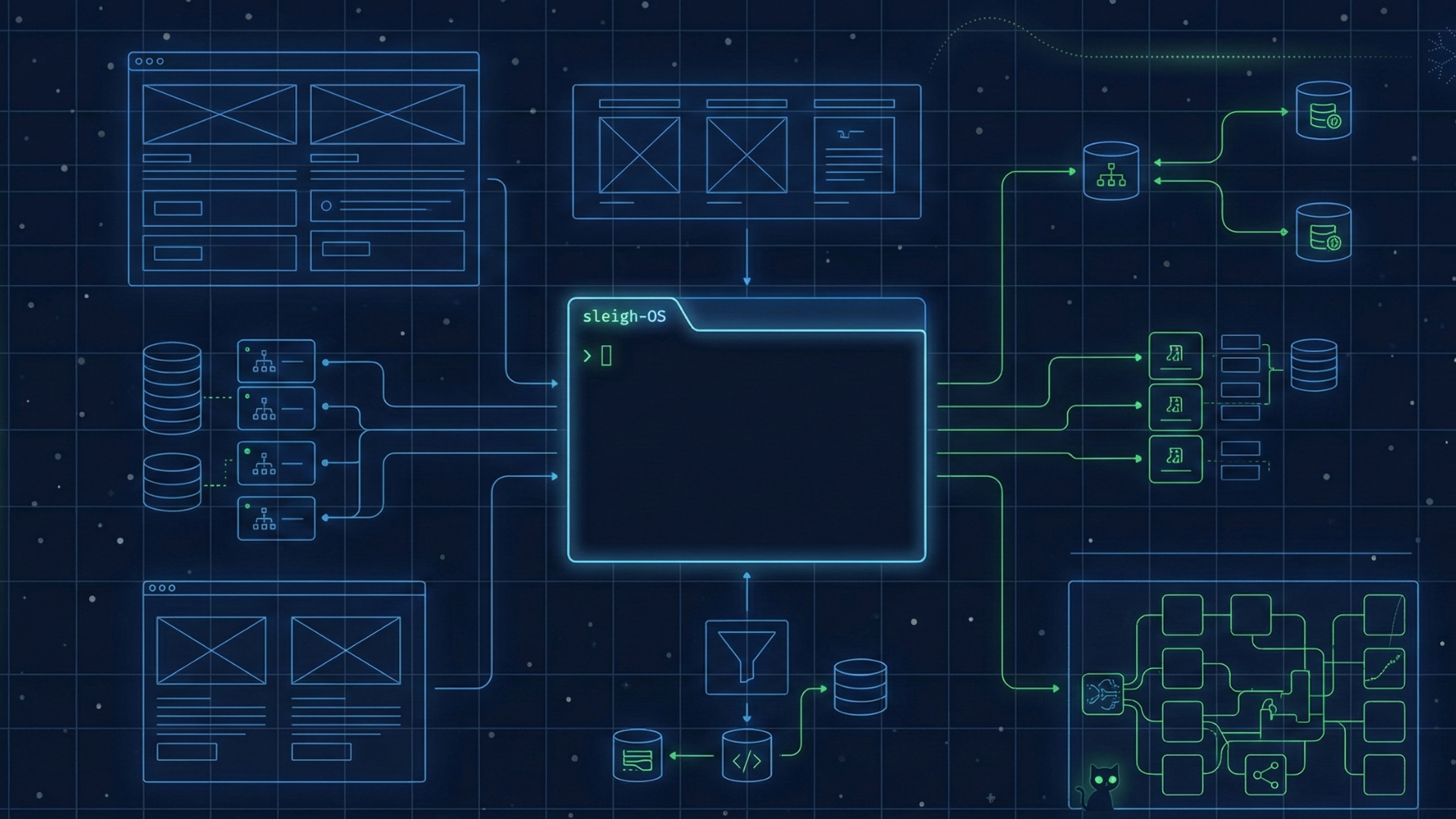
Built with WorqHat App Builder, Workflows, and Database. No backend code required.




Starting with WorqHat
is Simple, Fast and Free
Join thousands of developers, designers, and creators who use WorqHat to build amazing products. Get early access to new features, tutorials, and updates delivered straight to your inbox.